Roofing Lead Response: The 5-Minute Rule
Roofing Sales, Roofing Lead Response Time
The 5-Minute Rule: What Happens When a Roofer Takes Too Long to Respond to a Lead
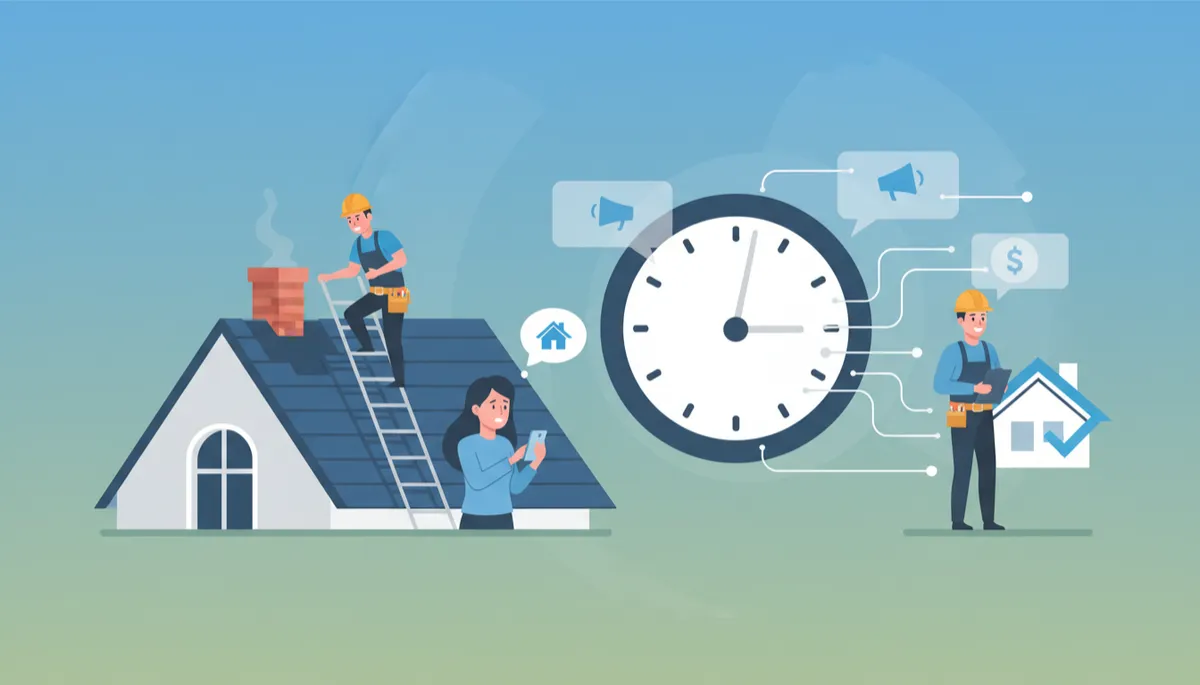
Roofing lead response time is one of the most critical and most overlooked drivers of how many homeowners you actually reach and how many estimates you book. This article explains why the first five minutes matter, what really happens when you wait, and how roofing companies can build a practical, repeatable response process with ActivatorSystem.
A Realistic Scenario: The Lead That Comes In While You’re on a Roof
You’re on a steep roof with your crew, checking decking and snapping photos. Your phone is in the truck so you can stay focused and safe. At 10:07 a.m., a homeowner three miles away fills out a “Request an Estimate” form after noticing shingles in the yard from last night’s storm. They want help today, not next week, and they submit the same inquiry to three roofing companies they found on Google.
One competitor calls within two minutes. Another sends a text and follows up with a call at the five-minute mark. You see the lead at lunch, return the call at 1:30 p.m., and leave a voicemail. By then, the homeowner has already spoken with two contractors, scheduled an estimate, and mentally moved on. You never connect, even though it was a strong, local, insurance-paid roof replacement opportunity.
What Is the Five-Minute Rule in Roofing Lead Response Time?
Industry data shows that the odds of qualifying a lead drop sharply as the minutes pass. Studies summarized by LeadToSpeed and CustomerFlows, drawing on MIT and Oldroyd research, indicate that contacting a lead within five minutes can make it roughly 21 times more likely to qualify compared with waiting just 30 minutes.
For roofing specifically, 2026 benchmarks show top performers responding in under five minutes, with elite teams often under one minute, while the median roofer responds in about 4.5–8 hours and some averages stretch to 14.7 hours.
The five-minute rule is not a magic cut-off where every lead disappears at 5:01. Instead, think of five minutes as a practical, competitive target. The closer you get to it, the more homeowners you reach live, and the more estimates you book from the marketing dollars you already spend.
How Roofing Lead Response Time Shapes Your Ability to Reach Homeowners
Speed Decides Who Starts the Conversation
When a homeowner submits multiple inquiries, the contractor who responds first usually controls the conversation. They:
Sets expectations about pricing, insurance, and timelines
Frames what a “good” roofing experience should look like
Books the first appointment on the homeowner’s calendar
If your roofing lead response time is measured in hours instead of minutes, you often arrive late to a conversation that is already in motion or already finished. Even if you eventually connect, you are now the “extra quote,” not the trusted guide.
Why Even High-Quality Leads Become Hard to Reach
Slow response does more than let competitors go first. It also makes good leads harder to reach at all. NeverMiss reports that callbacks within the first hour have about a 29% success rate, dropping to 21% between 1–4 hours, and 12% or less by the next business day.
Homeowners go back to work, pick up kids, silence unknown numbers, or simply feel they have “handled it” once they talk to one or two roofers. A lead that looked perfect on paper -right area, full roof, ready to move - can quickly turn into multiple unanswered calls and no-show appointments when you wait too long to respond.
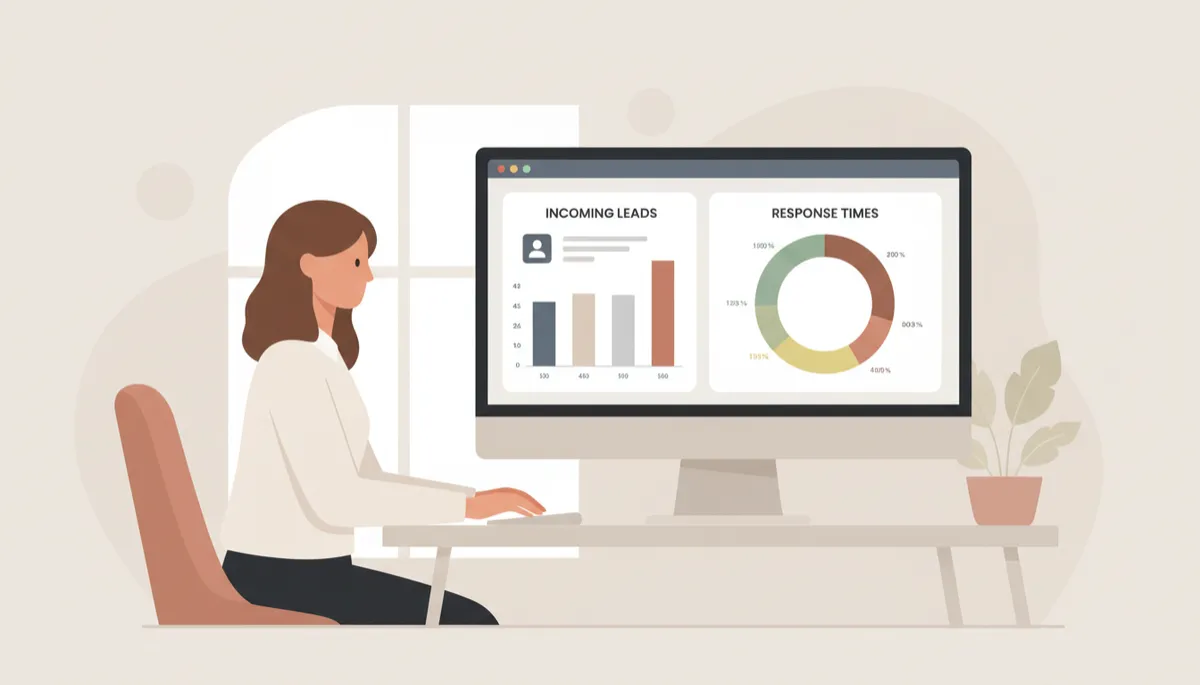
Tracking response time and contact rate exposes where strong roofing leads are slipping away.
A Practical Five-Minute Response Process for Roofing Companies
1. Capture Every Inquiry in a CRM Automatically
The five-minute rule is impossible if leads sit in email inboxes or voicemail. Route web forms, calls, and advertising leads directly into a roofing-focused CRM so nothing is missed. Systems such as the CRM solutions from ActivatorSystem can centralize leads, track response time, and trigger alerts the moment a new inquiry arrives. Learn more at ActivatorSystem CRM Services.
2. Assign Clear Responsibility for First Contact
Decide who owns the first response: office coordinator, inside sales, or a rotating on-call person. In your CRM, new leads should automatically be assigned to a specific owner with a visible due time (for example, “Call by 10:12 a.m.”). When everyone is responsible, no one is responsible – clarity is essential for speed.
3. Send an Immediate Automated Acknowledgment (But Don’t Stop There)
As soon as a lead is captured, trigger an automated text or email that confirms you received the request and sets expectations. For example:
Sample acknowledgment: “Thanks for reaching out to [Company Name] about your roof. We’ve received your request. A team member will call you within the next few minutes to confirm details and schedule your estimate.”
This acknowledgment reassures the homeowner that their inquiry did not disappear. However, it is not a meaningful conversation. It does not qualify as “lead contacted” or “estimate booked.” It simply buys you a short window to make a real, human connection.
4. Notify the Team and Attempt a Personal Response Within Five Minutes
Your CRM should immediately notify the assigned person via app notification, text, or email. Their job is to:
Call the homeowner as soon as possible (ideally under five minutes)
If no answer, leave a brief, clear voicemail and send a follow-up text
Log the attempt in the CRM so you can track response time accurately
The goal of this first live touch is simple: confirm basic details and guide the homeowner toward a booked estimate.
5. Guide the Homeowner to a Firm Estimate Appointment
Once you reach the homeowner, move quickly but professionally:
Confirm the property address, roof type, and urgency (storm damage, leak, planned replacement)
Offer the earliest realistic estimate window and a backup time
Add the appointment to your calendar and send a confirmation text or email with date, time, and who will arrive
For a broader follow-up schedule beyond the first contact, including multi-touch sequences, see ActivatorSystem’s guide on roofing lead follow-up at this article.
Handling After-Hours Roofing Inquiries and Missed Calls
Around 30–40% of roofing leads now arrive outside traditional business hours - evenings, weekends, and immediately after storms. Without a plan, these leads often wait 10–12 hours for a response, and many never convert.
After-Hours Best Practices
Use an automated text and email acknowledgment that fires 24/7, sets expectations, and, where possible, lets homeowners request an estimate time window.
For storm events and busy seasons, consider limited after-hours coverage or an answering service that can warm-transfer urgent calls to an on-call team member.
First thing in the morning, prioritize overnight leads and missed calls in your CRM. Aim to personally contact them within the first 30–60 minutes of the workday.
Missed Calls During the Day
Even well-run roofing companies miss calls when crews are in the field. Treat every missed call as a new lead:
Log it in the CRM with source and time
Call back immediately when you see it, then follow with a text if there is no answer
Track whether you ultimately connect and whether an estimate is booked
Automated Acknowledgment vs. Real Conversation: Know the Difference
Automation is a powerful tool, but it can also create false confidence if you treat it as the finish line instead of the starting point. For measurement and management, it helps to make clear distinctions:
Automated acknowledgment: A system-generated text or email confirming receipt of the inquiry. Important for reassurance, but does not qualify the lead or build a real relationship.
Meaningful conversation: A live phone call or two-way text where a team member confirms homeowner details, understands the project, and moves toward booking an estimate.
When you evaluate roofing lead response time, measure the gap between when the lead arrives and when the first real conversation happens - not just the automated message.
Measuring Response Time, Contact Rate, and Booked-Estimate Rate
Response Time (Speed to Lead)
Define response time as the minutes between lead creation in your CRM and the first genuine outreach attempt by your team (call or personalized text). Track:
Median response time: A more accurate view than averages, which can be skewed by a few very slow responses.
Contact Rate
Contact rate is the percentage of leads where you successfully reach the homeowner in a live conversation (phone or two-way text). For example:
Contact rate formula: Number of leads reached / total leads received × 100.
As your roofing lead response time drops, you should see your contact rate rise, especially in high-intent channels like storm inquiries and local search.
Booked-Estimate Rate
Booked-estimate rate measures how many leads progress from first contact to a scheduled on-site or virtual estimate. Track:
Leads with a completed conversation
Leads with a confirmed estimate appointment on the calendar
Booked-estimate rate formula: Number of leads with scheduled estimates / total leads received × 100.
Roofing companies that reduce response time from hours to minutes often see both contact rate and booked-estimate rate improve, even before increasing ad spend. CustomerFlows modeling suggests that a midsize roofing company responding in four hours instead of within five minutes can lose roughly nine deals per month, or about $918,000 per year in revenue potential.
FAQ: Roofing Lead Response Time and the Five-Minute Rule
How quickly should roofers respond to leads?
Current benchmarks show that responding within five minutes significantly increases your odds of reaching and qualifying a homeowner compared with waiting 30 minutes or more. In practice, aim to keep your median response time under five minutes during business hours and under 30–60 minutes for overnight leads first thing the next day. Faster is better, but consistency is more important than chasing a theoretical one-minute response on every inquiry.
Do automated texts count as a response?
Automated texts and emails count as an important acknowledgment, but they should not be treated as a full response in your metrics. They reassure the homeowner and buy you time, but they do not replace a real conversation. For tracking, measure both:
Time to automated acknowledgment (usually seconds)
Time to first meaningful human contact (your true roofing lead response time)
How should roofers handle inquiries received after hours?
For after-hours leads, set up 24/7 automated acknowledgments that confirm receipt, explain your normal hours, and promise a follow-up. During storm events or peak season, consider limited on-call coverage or an answering service to handle urgent situations. At the start of each workday, treat overnight and weekend inquiries as priority leads and attempt personal contact as early as possible. The goal is to shorten the delay from “overnight” to “first thing in the morning,” not to ignore those leads until midday.
Turn More Roofing Leads into Booked Estimates with ActivatorSystem
Roofing lead response time is one of the clearest levers you can pull to reach more homeowners, protect your marketing investment, and book more estimates without simply buying more clicks. With the right CRM, clear ownership, smart automation, and a disciplined process, five minutes becomes a realistic standard instead of an impossible goal.
If you want to tighten your response process, track the right metrics, and connect your advertising, follow-up, and search into one integrated system, request a strategy consultation with ActivatorSystem. Our team can help you design a response framework that supports faster contact, more booked estimates, and long-term growth for your roofing business.