
How to Generate Roofing Leads Without Buying Shared Leads
Roofing, Lead Generation, Direct Inquiries
How to Generate Roofing Leads Without Buying Shared Leads
Roofing contractors can generate direct inquiries through their website, local search visibility, paid advertising, referrals, local partnerships, and authentic project marketing. Direct acquisition still carries real costs and does not prevent homeowners from contacting competing roofers, but it gives owners a clearer view of how inquiries start and how they move toward projects. This article focuses on practical steps roofing business owners can use to build and measure their own direct inquiry systems without relying entirely on shared lead marketplaces.
What “Without Shared Leads” Really Means
Before you adjust your acquisition strategy, it helps to use clear definitions. Roofing businesses often work with three main inquiry types.
1. Purchased shared inquiry
A purchased shared inquiry is an inquiry a provider distributes to multiple contractors under its agreement. A homeowner fills out a form on a marketplace and that information is then shared with more than one company according to the provider’s rules. Pricing, access, and usage rights depend on the specific contract and setup.
2. Purchased exclusive inquiry
A purchased exclusive inquiry is an inquiry a provider agrees to distribute to one contractor under specified terms. The provider’s agreement controls how the inquiry is generated, how it is delivered, and what rights you have to use the information. Cost and control vary by provider, contract, and campaign structure.
3. Direct inquiry
A direct inquiry is when a homeowner contacts your company through your advertising, website, local listing, referral, partnership, or other direct activity, rather than through a shared marketplace provider. The homeowner calls, texts, submits a form, or messages your business using channels you manage or have arranged. Ownership and access to the information still depend on how your systems are configured and what agreements are in place with any vendors.
Website and local search presence
Advertising that you place and manage or supervise
Referrals, partnerships, signs, or project visibility that point directly to you
Direct does not mean free or guaranteed exclusive. It means the inquiry starts from activity controlled by your business or your vendors, and you can usually see and measure more of the steps that led to that contact. Homeowners can still contact other roofers at the same time.
What is a qualified opportunity?
A qualified opportunity is a unique project where successful communication with a homeowner or authorized decision maker confirms service area, service fit, a genuine roofing need, recorded timing, and an agreed next step.
The property is within your realistic service area and travel radius.
The request matches services you actually provide, such as roof replacement, repair, or related exterior work.
There is a genuine roofing or exterior need, even if the project may happen later. General research without a defined need does not qualify.
Timing is recorded in your system so you can follow up appropriately, whether soon or in the future.
You and the homeowner or authorized decision maker agree on a clear next step, such as scheduling a visit, sending information, or checking back at a specific time.
Keep qualified opportunities separate from booked appointments and completed estimates so you can see how many inquiries truly meet your basic conditions before scheduling and site visits.
Map the Path From Interest to Inquiry
Most homeowners move through a simple path before they contact a roofer. They notice a problem or requirement, look for options, compare a few choices, then decide to reach out. Your job is to make each step clear and straightforward so it is easy for them to recognize your company as a relevant, trustworthy option.
Typical homeowner journey
Trigger: a storm, aging roof, leak, insurance request, sale preparation, or a visible project nearby.
Research: online searches for local roofing companies, conversations with friends or neighbors, and review checks.
Evaluation: reviewing websites, photos, services, reviews, and proof of work to decide which companies feel appropriate for their situation.
Decision to inquire: selecting one or more contractors that appear credible, reachable, and relevant to the project.
Action: calling, texting, submitting a form, or sending a message through a listing or social channel.
Build a Website and Inquiry Path That Support Direct Leads
Your website and connected contact paths should make it easy for homeowners to understand what you do, see real work, and request help in a way that fits them. You do not need a complex application, but you do need clear structure and basic organization across your site, forms, and contact records.
Service pages that match real work: create straightforward pages for roof replacement, roof repair, and other exterior services you actually provide. Use authentic project photos, accurate descriptions of materials and warranties, and a simple explanation of how you handle inspections and estimates. Only publish credentials, warranties, testimonials, and offers that you can substantiate.
Local proof and project evidence: show completed projects with city or neighborhood names where appropriate and permitted, and short descriptions of the problem, solution, and outcome. Use only genuine photos from your work and real client feedback with permission.
Trust elements and accurate credentials: list licenses, insurance, manufacturer certifications, and review profiles that are current and verifiable. Keep the language clear so homeowners understand why those items matter to them.
Simple inquiry options: provide a visible phone number, a short form that captures name, address, phone, email, and service type, and a clear invitation such as “Request a roof assessment.” Set realistic expectations about response times based on your staffing and hours, and reflect those expectations in any automated replies.
Behind the scenes, every inquiry should be stored in a central system such as a CRM or structured spreadsheet, with fields for contact details, source, service type, timing, and next step. The specific tools matter less than the discipline of capturing each inquiry once, avoiding duplicates where possible, and updating the record as the project moves from inquiry to qualification, appointment, estimate, and outcome.
Use authentic project examples and accurate information about your business so homeowners can see what you actually deliver, not just what a template says you should promise.
Five Direct Inquiry Sources With First Actions and Limits
Most direct roofing inquiries come from a small set of sources that you can influence. Treat each source as its own area of work with a clear starting step and a realistic understanding of what it can and cannot do for your business.
1. Local search visibility through listings and SEO
When homeowners search for roofing help in your area, they often see map listings and organic search results. Appearing clearly with accurate information increases the chances that they will contact you directly instead of only seeing marketplaces or national brands.
First action: complete and maintain your main local listings, such as your Google Business Profile, with correct service areas, contact details, hours, services, and authentic project photos. Ask customers for honest public reviews that reflect their real experience, without coaching them on specific phrases. If you want structured SEO support, consider services such as the SEO work provided by ActivatorSystem SEO services.
Limitation: changes to local search visibility and organic rankings depend on many factors outside your direct control, including competition and search engine updates. Results can take time and may not follow a fixed schedule, so this channel should be planned as a continuing effort rather than a quick switch.
2. Paid search advertising
Paid search on platforms such as Google and Bing allows your ads to appear when people look for roofing services. You can direct this traffic to pages that match the search intent, such as roof replacement or roof repair, and invite homeowners to request a roof assessment or call your office.
First action: set a clear monthly budget and create a focused campaign that highlights one main service and your primary service area, sending clicks to a relevant page with a visible phone number and short inquiry form.
Limitation: paid search spending can escalate quickly without close oversight. Search terms, budgets, and landing pages all influence cost and inquiry quality, and there is no guarantee that every click will turn into a meaningful project conversation. Paid search should be reviewed regularly against real inquiries and later outcomes, not just impressions or clicks.
3. Facebook and Instagram advertising
Facebook and Instagram can show your roofing projects and offers to people in locations you serve, including homeowners who may not be actively searching but recognize a need when they see relevant work. Visual proof from real jobs can help them connect your name with the type of project they have in mind.
First action: prepare one or two clear ads featuring authentic before and after photos from your projects, a short explanation of the service, and a call to “Request a roof assessment” that leads to a simple form or direct message option. Align your targeting with your realistic service area and capacity.
Limitation: people using social platforms may be browsing rather than actively planning a roofing project. Some inquiries will be early stage or exploratory, and results depend heavily on creative quality, audience selection, and follow up. This channel should be evaluated on actual inquiries and qualified opportunities, not just engagement metrics.
4. Customer referrals and local partnerships
Referrals from past customers and introductions from local professionals can be strong sources of direct inquiries. A homeowner who has already worked with you, or a local contact who understands your services, can help new prospects feel more comfortable reaching out.
First action: decide when and how you will invite referrals in a way that fits your brand. For example, after a successful final walkthrough and payment, you might thank the customer and let them know you welcome referrals, then follow with a simple email or text that includes links to your review profiles and website. For local partners such as real estate professionals or property managers, prepare a one page overview of who you serve, where you work, and how you handle referred homeowners, and agree on how you will keep them informed about outcomes.
Limitation: referrals and introductions are influenced by relationships and timing. They can fluctuate from month to month and should be supported by consistent communication and service quality, not treated as a guaranteed volume source. Track referred inquiries in your CRM or records so you can see how often they arise and how they perform without assuming a specific conversion rate.
5. Project based neighborhood marketing
Active projects create visibility in the surrounding area. When permitted by the property owner and local rules, on site signs, clean vehicles, and follow up materials can help nearby homeowners connect your company with real work they can see from the street.
First action: establish a simple project visibility checklist that respects property permission and local requirements. This might include requesting permission for a yard sign, providing the homeowner with extra business cards or a small information piece for neighbors who ask, and documenting the project with photos you can later use on your website and listings. Any door to door activity should comply with local regulations and your own standards for respectful contact, without fixed quotas for the number of homes to approach.
Limitation: project based marketing depends on where and when your crews are working, on homeowner permission, and on neighborhood rules. Activity and results will vary over time and location, so this channel is best viewed as a way to enhance existing projects rather than as a standalone volume driver.
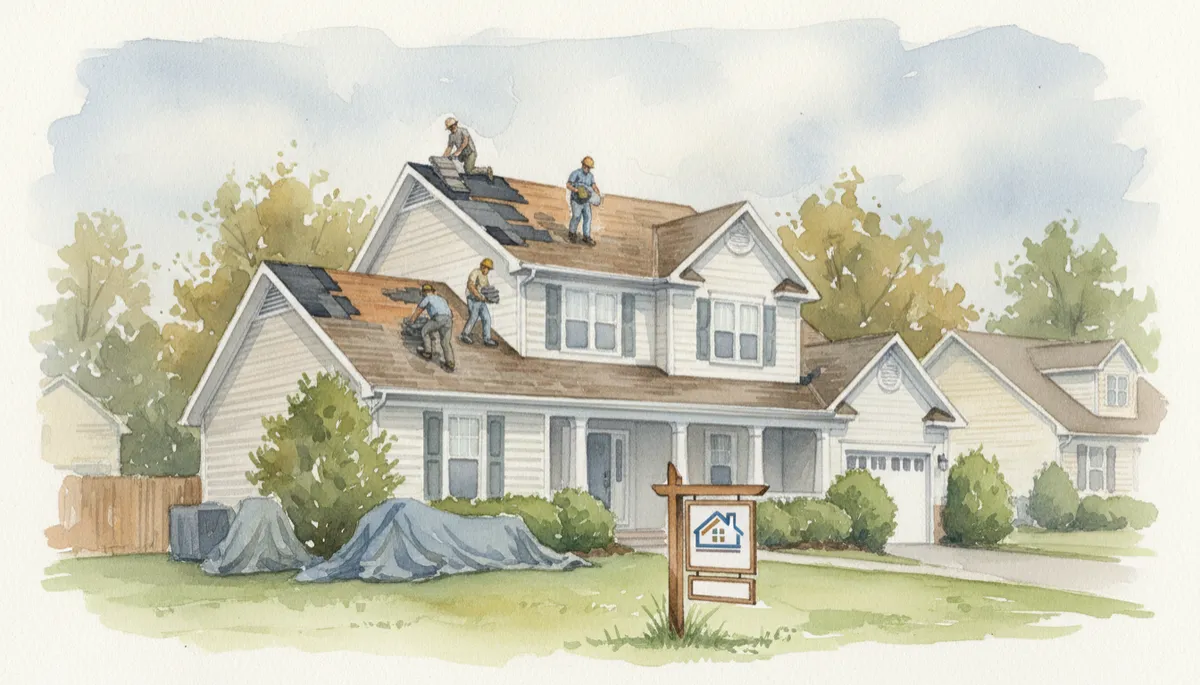
Treat each active project as a chance to create appropriate, permission based local awareness.
Handle Inquiries and Reactivation With Clear Steps
Direct inquiries only create value if they are handled in a consistent way. That means distinguishing between acknowledgment, contact attempts, successful contact, qualification, appointments, estimates, and final outcomes. It also means treating reactivation of past projects carefully so you do not count the same opportunity multiple times.
Acknowledgment: when an inquiry arrives by form, message, or missed call, your system should record it and, where appropriate, send an automatic acknowledgment that reflects your actual hours and availability. After hours messages should not imply live coverage that you cannot provide.
Contact attempts: your records should show whether your team has called, texted, or emailed, and when. Set attempt limits that match your staffing, brand, and regulations, and decide what happens when an inquiry is not reached after those attempts, such as marking it as unreached with a clear final disposition.
Successful contact and qualification: once you speak with the homeowner or authorized decision maker, update the record to reflect whether it became a qualified opportunity based on service area, service fit, genuine need, timing, and a defined next step. Keep this separate from booked appointments and completed estimates.
Automation controls: if you use automated follow up by text or email, design it so it stops or changes when someone replies, books, reschedules, declines, opts out, or when a team member documents manual contact. Automation should support your team, not talk past homeowners after they have already made a decision. You can use CRM support such as ActivatorSystem CRM services to configure these rules.
For reactivation, start by identifying past inquiries and projects where work did not proceed or where additional services might be relevant. When you reach back out, keep the original acquisition source recorded and add a new activity or campaign tag rather than counting a second new inquiry for the same project. If a past customer contacts you about a genuinely new property or a separate project, record that as a new inquiry with its own details.
Reactivation efforts should respect prior communication history, opt outs, and outcomes, and should not erase or overwrite the original record of how the inquiry first entered your system.
A Hypothetical Example of Direct Acquisition Metrics
To see how direct inquiries can be measured over a defined period, consider the following hypothetical example. These figures are assumptions for illustration, not client results or industry benchmarks. The total acquisition marketing spending includes associated expenses such as advertising, management, creative work, and relevant software for this acquisition period, without counting the same expense twice.
Metric | Hypothetical value |
|---|---|
Total acquisition marketing spending | $5,000 |
Unique project inquiries | 50 |
Cost per inquiry | $100 |
Qualified opportunities | 25 |
Qualification rate | 50 percent |
Booked appointments | 20 |
Booking rate from qualified opportunities | 80 percent |
Completed estimates | 15 |
Appointment completion rate | 75 percent |
Signed jobs | 5 |
Completed estimate to signed job conversion | One third |
Acquisition marketing cost per signed job | $1,000 |
These numbers do not determine profitability on their own. Job values, direct costs, cancellations, completion outcomes, overhead, and other expenses all affect actual results. It is also important to group inquiries by acquisition period and recognize that appointments, estimates, signed agreements, installation, and payment can occur later than the initial contact.
Five Practical Action Steps for Direct Inquiry Strategy
Define one target service and realistic service area. Decide which service you want to emphasize, such as roof replacement or repair, and outline a service area that matches your crews, travel time, and margins. Use this definition across your website, advertising, and local listings so your messaging is consistent.
Check access to your website, advertising accounts, local listing, and contact records. Confirm that you or a trusted partner can log in to your website platform, main ad accounts, primary local listings, and CRM or contact database. Without access, it is difficult to see what is happening, adjust campaigns, or measure inquiry flow accurately.
Prepare an honest offer, authentic evidence, and a clear inquiry path. Align your main offer, such as “Request a roof assessment,” with what your team can reliably deliver. Gather real project photos, testimonials, and credentials you can back up, and make sure homeowners can see how to contact you from your website, listings, and advertising without confusion. Resources such as roofing lead follow up guidance can help you connect your offer with consistent communication.
Choose a focused acquisition test that fits budget and capacity. Select one primary channel to test or refine, such as local search visibility, paid search, or social advertising, and set a budget and volume target that match your crew capacity and risk tolerance. Track inquiries, qualified opportunities, appointments, estimates, and signed jobs from this effort without assigning full credit to multiple campaigns for the same project.
Review handling weekly and evaluate outcomes as each inquiry group matures. Once a week, review new inquiries, status changes, and any reactivation activity. Over time, examine how each group of inquiries progresses from first contact through qualification, appointments, estimates, and final outcomes. Merge duplicate project inquiries where appropriate, preserve unknown sources instead of guessing, retain cancellation history, and avoid giving more than one campaign full credit for a single signed job.
FAQs About Generating Roofing Leads Without Buying Shared Leads
Can I generate roofing leads without buying them?
Yes, many roofing contractors generate inquiries directly through their website, local search visibility, paid advertising, referrals, partnerships, and project based marketing. Doing this consistently requires clear offers, visible contact paths, organized records, and regular review of how inquiries move through your process. Direct acquisition still involves marketing spending and time, and it works best when you measure the results and adjust based on what you see.
Are direct roofing leads exclusive?
Direct inquiries are not automatically exclusive. A homeowner who finds your website or listing can also contact other contractors at the same time. Exclusivity depends on the situation and any agreements in place. If you work with vendors or agencies to generate direct inquiries, review the terms that govern how those inquiries are generated, stored, and shared so you understand your rights and responsibilities.
What does it cost to generate my own roofing leads?
The cost to generate direct roofing inquiries varies by market, competition, channel mix, and how you manage your campaigns. Relevant expenses can include advertising, creative work, management fees, and software related to acquisition. To understand your own costs, group inquiries by acquisition period, total your related acquisition marketing spending for that group, and divide by the number of inquiries, qualified opportunities, and signed jobs. This gives you a clearer view of your actual unit costs without relying on general averages.
Should I stop buying shared roofing leads?
Whether to reduce or stop buying shared inquiries depends on your actual economics, contractual terms, and capacity to replace that volume with other sources. Compare your acquisition cost per signed job, cancellation rates, and job quality from shared inquiries to the same metrics for your direct channels. Consider how quickly you can build and manage direct acquisition without overloading your team. Some contractors gradually rebalance their mix as direct channels become more predictable, rather than making abrupt changes based on assumptions.
How do I know whether my direct inquiries are worthwhile?
To judge whether direct inquiries are worthwhile, track how they perform from first contact through final outcome. Look at cost per inquiry, qualification rate, appointment and estimate completion rates, and how many signed jobs result from each group of inquiries. Compare these figures with the time and budget you invest, and factor in job size, direct costs, cancellations, and completion quality. Direct inquiries are most useful when they help you see which activities lead to sustainable projects and which need to be adjusted or reduced.
Closing Perspective on Direct Roofing Inquiries
Moving away from shared leads is not about rejecting one channel in every situation. It is about building an acquisition approach that fits your market, your crews, and your long term plans, with enough measurement to understand what is working. Direct inquiries give you more visibility into how homeowners find you and how they progress, but they still require thoughtful handling, accurate information, and disciplined follow up.
ActivatorSystem is a marketing and client acquisition service for roofing and exterior contractors, supporting paid advertising, SEO services, lead capture, CRM services, and automated follow up. Contractors remain responsible for inspections, estimates, pricing, closing, and production, while ActivatorSystem helps create and organize the flow of inquiries that feed those activities. For more detail on how follow up fits into this picture, you can review the guidance at roofing lead follow up.
Want to build more direct roofing inquiries? Share your current lead sources, acquisition spending, unique inquiries, and completed estimates with ActivatorSystem.