
Roofing Lead Generation: The 2026 Playbook
Roofing, Roofing Lead Generation
The 2026 Roofing Lead Generation Playbook
A roofing lead generation plan should identify the jobs you want, the homeowners you serve, the channels you will test, and the process for converting inquiries into completed work. More leads alone do not guarantee growth - only qualified demand, handled well, turns into profitable projects and a stronger business.
1. Define the Roofing Jobs You Want Before Choosing a Marketing Channel
Effective roofing lead generation starts with focus. Before you touch advertising or SEO, decide which jobs you actually want. Repairs versus replacements, residential versus commercial, storm work versus maintenance, and which ZIP codes you will serve profitably. Each segment can have different job values, decision timelines, and expectations from homeowners and property decision-makers.
Repairs vs. replacements: different scopes of work, potential ticket sizes, and decision timelines.
Residential vs. commercial: different decision-makers, timelines, and content needs for homeowners and property decision-makers.
Service areas and crew capacity: avoid leads you cannot service within a reasonable timeframe.
Campaigns that “take any roofing job, anywhere” usually waste budget. A clear service and audience let you tailor your roofing marketing strategy, message, and offers to the right homeowners and property decision-makers instead of chasing every inquiry.
2. Work Backward From Your Revenue Goal
Roofing lead generation strategies should be built from the numbers, not guesses. Connect your revenue target, average job value, and conversion rate from lead to sold job using a hypothetical planning example - not as an industry benchmark.
Define your additional revenue goal, for example, $500,000 over the next 12 months.
Estimate average job value, say $10,000 per roof replacement.
Use your current lead-to-customer conversion rate - assume 10%.
In this example, hitting $500,000 at $10,000 per job requires 50 additional sold jobs. At a 10% lead-to-customer rate, you need roughly 500 additional unique leads and the capacity to complete those 50 jobs and generate the planned revenue within the period. This math keeps your plan realistic and grounded in roofing customer acquisition economics, not wishful thinking. Use your own historical conversion data from leads that have had enough time to reach an outcome, rather than assumptions alone.
3. Build a Credible Foundation for Roofing Lead Generation
Before scaling traffic, ensure your digital foundation can convert attention into trust. Homeowners and property decision-makers need four things quickly: what you do, where you work, proof you have done it before, and the next step to get help.
Accurate business information across your website, Google Business Profile, and directories.
Clear service pages for repairs, replacements, residential, and commercial work.
Authentic project photos and honest reviews from real customers.
A simple, visible way to request an estimate or inspection.
This foundation supports both paid advertising and organic visibility. Without it, additional traffic leaks away.
4. Choose the Right Mix of Lead Sources
Build your channel mix around your budget, target jobs, and ability to handle inquiries. Start with a focused acquisition test, then consider additional sources as results and capacity justify them. Each option requires time, money, or both.
Google Search Ads and Local Services Ads capture high-intent searches like “roof replacement near me.” Learn more about structured campaigns at ActivatorSystem paid advertising.
Facebook and Instagram help you test visual offers, storm messages, and financing angles with defined audiences.
Local SEO and Google Business Profile support long-term organic and local visibility when people search for roofing services in your area.
Customer referrals and local partnerships with agents, property managers, and contractors generate warmer opportunities.
Re-engaging past inquiries - can surface projects that were delayed, not lost, especially when managed via a CRM.
Avoid universal rankings or promises of “free” or guaranteed leads. The right mix depends on your market, budget, and capacity.
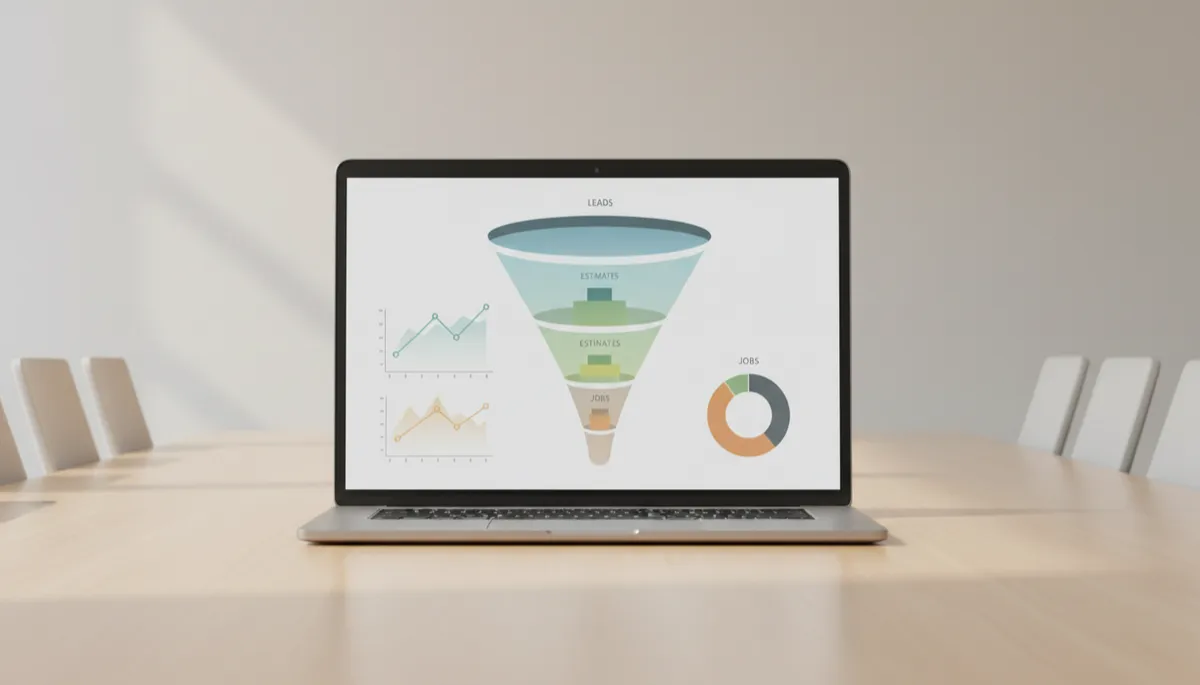
Tracking each lead source to revenue clarifies where to double down or cut spend.
5. Turn Website Visitors Into Qualified Inquiries
Once traffic arrives, send visitors to a page that clearly matches the advertised service and location, with a visible next step. Use clear calls to action, mobile-friendly layouts, and concise forms. Ask for:
Service needed (repair, replacement, inspection),
Property address or ZIP code,
Name, phone, and email.
Additional qualification - insurance claim status, timeline, budget all can be discovered during the conversation. Do not assume that more form submissions always mean better results; quality and close rate matter more than raw volume.
6. Give Every New Roofing Lead a Clear Next Step
Every inquiry should follow a defined repeatable path - routing to the right person, a named owner, prompt contact, qualification, scheduling, reminders, and follow-up. Automated texts and emails confirm receipt, but they do not replace a live conversation. A dedicated CRM, such as those outlined in ActivatorSystem CRM services, keeps this process consistent. For deeper guidance, see ActivatorSystem’s resources on roofing lead follow-up and the five-minute response rule.
Key takeaway: A good roofing lead generation strategy connects traffic, conversion, and disciplined follow-up, not just “more clicks.”
7. Track Which Leads Become Profitable Work
To know whether roofing lead generation is working, track the full journey:
Unique leads → qualified leads → booked estimates → completed estimates → sold jobs → completed jobs → revenue.
Evaluate your numbers using clear, distinct metrics:
Cost per lead - acquisition spend divided by unique leads, using a clearly stated cost basis (for example, advertising only, or advertising plus agency fees).
Ad-only cost per sold job - advertising spend divided by attributed sold jobs, to understand how paid media alone is performing.
Total customer acquisition cost - relevant sales and marketing costs (such as advertising, agency fees, acquisition software, and sales labor) divided by new customers acquired.
Avoid folding general production overhead into customer acquisition cost indiscriminately, but remember that job costs and operating expenses still determine whether growth is profitable. Track sources consistently, avoid double counting leads from multiple touchpoints, and review results with enough time for inquiries to move through the sales cycle to sale and completion.
8. A Practical 90-Day Implementation Plan
Phase | Actions |
|---|---|
Days 1–30 | Review past results, define target jobs and service areas, fix tracking and basic conversion issues, and choose one focused acquisition test (for example, a focused Google Search Ads campaign with a service-specific landing page). |
Days 31–60 | Review inquiry quality, response speed, estimate set and show rates, and early sales. Adjust targeting, messaging, and follow-up based on evidence. |
Days 61–90 | Assess results, improve the weakest stage in your funnel, and expand only where economics and crew capacity support it. Allow for sales-cycle delays before judging results. Treat these as planning phases, not guaranteed deadlines, and avoid expecting SEO breakthroughs inside 90 days. |
9. Common Roofing Lead Generation Mistakes
Buying more leads before fixing follow-up and response time.
Spreading a limited budget across too many channels with no clear test.
Optimizing only for cheap inquiries instead of cost per sold job.
Targeting outside realistic service areas, leading to long drives and low margins.
Failing to record outcomes, leaving you guessing which roofing lead generation strategies actually work.
10. Frequently Asked Questions
What is the best way to generate roofing leads?
There is no single “best” way. The right approach depends on your target services, local demand, budget, and sales capacity. Many roofing companies test a combination of channels over time, but your specific mix should follow your numbers, your market, and your ability to handle inquiries reliably.
How can roofers get leads without buying shared leads?
You can generate inquiries directly for your business through your website, advertising, local visibility, referrals, and appropriate follow-up. A strong website, clear contact options, local search presence, and consistent outreach encourage homeowners and property decision-makers to contact you, but they can still compare options and reach competitors as well.
How many roofing leads does my company need?
Use the framework above: revenue target ÷ average job value = jobs needed; jobs needed ÷ lead-to-customer conversion rate = required lead volume. Adjust for seasonality, crew capacity, and the time it takes leads to move from inquiry to completed job.
Should I use paid advertising, SEO, or both?
Paid advertising can help you test demand and messaging sooner, while SEO and broader organic visibility typically require ongoing work over a longer period. Neither approach guarantees lead volume. With a limited budget, you may decide to prioritize one approach first, then add others as results and cash flow allow.
How do I know whether my lead generation is working?
Track leads, estimates, sold jobs, and revenue by source, and compare acquisition costs to job margins, completed revenue, and available capacity. Lead volume alone is not proof of success, your roofing lead generation system is performing when you can acquire customers at a sustainable cost while maintaining healthy margins and production quality as you scale.
If you want a clear, data-driven roofing marketing strategy that connects advertising, SEO, CRM, and follow-up into one system, request a strategy consultation with ActivatorSystem. Book your conversation at our strategy consultation page, and explore how a tailored roofing lead generation plan can support your next stage of growth.